

19 MIN READ
Linux Foundation Europe | 25 February 2026
Welcome to the February 2026 edition of the LF Europe Newsletter.
In this edition of the LF Europe newsletter, you'll discover news and announcements from LF Europe, projects and community updates, LF Education opportunities, the latest insights from LF Research, and a preview of upcoming events.
>> Read on to stay informed, engaged, and connected with the vibrant LF Europe community.
Contents
- Exciting news + announcements from LF Europe
- LF Europe Projects: Featured news
- LF Education highlights
- LF Research: Two new reports on AI's impact around the world
- LF Europe Events: Mark your calendar
- Follow us!
Exciting news + announcements from LF Europe
-
A new chapter for Linux Foundation Europe
-
Linux Foundation Europe is entering its next phase of growth and impact across Europe’s open source, policy, and digital sovereignty landscape.
-
Since launching in 2022, under the leadership of Gabriele Columbro, Linux Foundation Europe has grown into a trusted, vendor-neutral home for nearly 200 members and seven collaborative projects, helping strengthen the voice of open source in key European policy conversations.
-
Effective March 1, Thierry Carrez will take on the role of General Manager of Linux Foundation Europe. Thierry brings deep experience in open infrastructure and community governance, alongside his leadership at the OpenInfra Foundation.
-
We thank Gabriele for his leadership and look forward to continuing to collaborate with him in his role as Executive Director of FINOS. And a big welcome to Thierry as we continue building Europe’s digital future, grounded locally and connected globally.
-
-
Recap of Linux Foundation Europe at EU Open Source Week 2026 | From 26 January to 1 February in Brussels, EU Open Source Week 2026 brought developers, maintainers, policymakers, researchers, and organisations together for a week of technical exchange, policy discussion, and community collaboration anchored around FOSDEM. For Linux Foundation Europe, it was the most comprehensive participation to date, spanning policy sessions, technical discussions, project showcases, and community events.
-
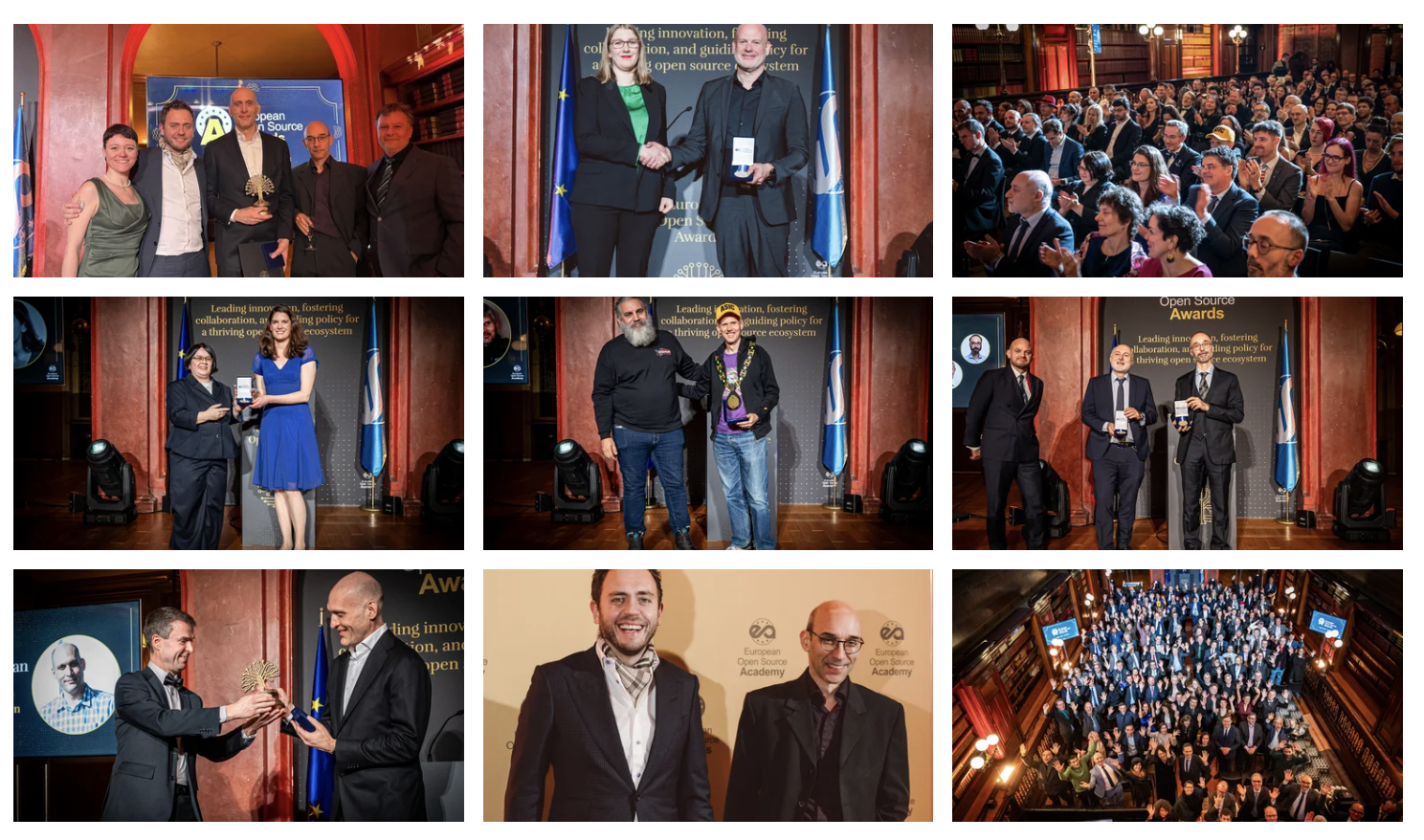
At the European Parliament, a breakfast discussion co-hosted by OpenForum Europe and MEP Michał Kobosko focused on the proposed European Union Sovereign Tech Fund (EU-STF), examining how Europe’s open source ecosystem can address maintainer sustainability and funding for critical digital infrastructure. The 2nd Annual European Open Source Awards recognised outstanding contributions across software and hardware, reinforcing the central role of open source communities in Europe’s digital sovereignty.
-
The EU Open Source Policy Summit highlighted how open source powers Europe’s ambitions across security, cloud, AI, standards, and industrial innovation. Discussions repeatedly returned to execution, procurement, investment, and avoiding fragmentation while strengthening Europe’s capability, participation, and influence in global ecosystems. At FOSDEM, Linux Foundation projects and European-led initiatives showcased growing leadership in open, sovereign technologies, alongside conversations on funding, venture capital, and sustainable commercial ecosystems.
-
Across policy forums, devrooms, and community gatherings, a clear theme emerged: Europe’s open source community is moving from advocacy to execution, with increasing alignment between developers, industry, and policymakers.
-
Read the blog >> to learn more about Linux Foundation Europe’s activities during EU Open Source Week 2026 and what comes next.
-
-
Call for evidence for the European Open Digital Ecosystem Strategy | The central theme of Linux Foundation Europe’s contribution to the European Commission’s Call for Evidence on the European Open Digital Ecosystem Strategy is that Europe’s technological sovereignty depends on strong participation in, and influence over, the global open source commons supported by neutral governance of critical digital infrastructure.
-
Open source is fundamental to Europe’s digital economy. It forms the foundation of most modern software proprietary and non-proprietary alike and supports successful business models across industries. It is not a single model, but a diverse ecosystem spanning different governance structures, sustainability approaches, and commercial strategies, and represents a significant share of today’s economic activity.
-
To strengthen technological sovereignty and competitiveness, Europe should deepen its strategic participation in the global open source commons rather than pursue isolated notions of “European Open Source.” The technologies driving cloud, AI, cybersecurity, and emerging digital infrastructure already exist as globally governed open source projects. Building influence upstream through sustained contribution, investment, and leadership offers the fastest and most realistic path to shaping critical technologies.
-
Europe should combine upstream engagement with targeted support for scaling commercial open source companies, modernized procurement practices that reward contribution as well as consumption, and funding instruments that reinforce globally relevant projects.
-
At the same time, critical open source infrastructure should be hosted under neutral governance to ensure balanced decision-making, reduce single-vendor lock-in risks, strengthen long-term stewardship, and enable rapid de facto standardisation as seen in cloud-native ecosystems around Kubernetes and operating systems around Linux.
-
As the European chapter of the Linux Foundation, we support a pragmatic, evidence-based strategy that builds on the global open source commons, strengthens Europe’s influence within it, and avoids fragmentation while advancing competitiveness, resilience, and technological autonomy.
-
-
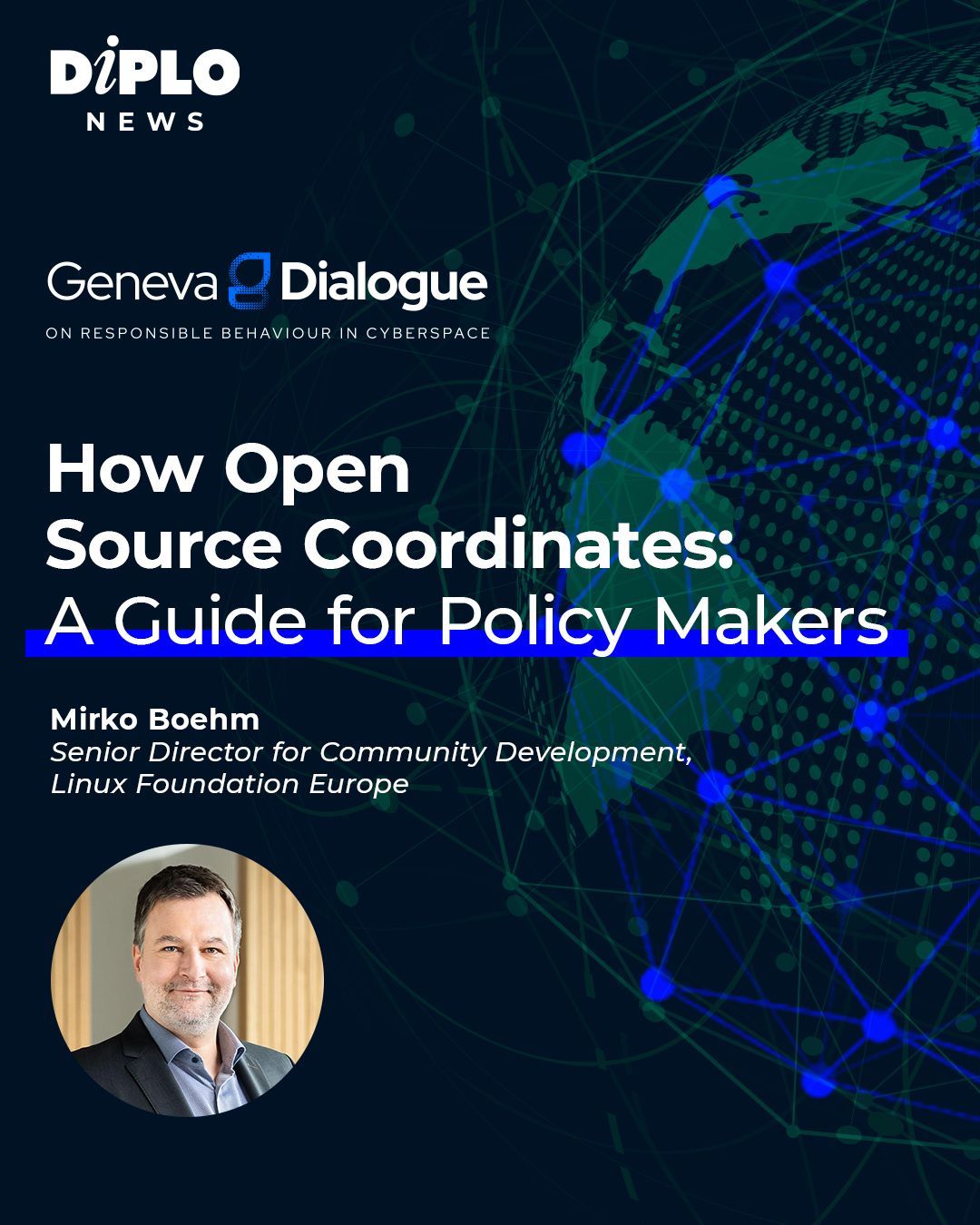
How Open Source Coordinates: A Guide for Policy Makers | Understanding horizontal governance in the FOSS ecosystem
-
Why do traditional policy and regulatory models struggle with open source software?
-
Free and open source software powers the critical infrastructure worldwide, yet it isn’t coordinated by CEOs, hierarchies, or central authorities. As explained in the Geneva Dialogue article by Mirko Boehm (Linux Foundation Europe), FOSS works through horizontal coordination, upstream–downstream dependencies, open governance, and self-organizing communities.
-
This structure enables powerful policy outcomes like technology transfer, standards enforcement, and industrial capability building, while also limiting control, borders, and top-down intervention. The core message is clear: effective policy must work with horizontal coordination, not against it.
-
Read the full blog >> to understand how open source really coordinates and why this matters for cyber and digital policy.
-
-
Linux Foundation Europe’s Most Viewed Content of 2025 | Europe’s open source ecosystem accelerated in 2025, with major conversations around digital sovereignty, cybersecurity regulation, AI, cloud infrastructure, and sustainable funding. From research reports and policy insights to project milestones, keynotes, and podcasts, Linux Foundation Europe’s most viewed content reflects a year of growing collaboration and real-world impact across sectors.
-
Read the blog >> to explore the most viewed content of 2025 and the themes shaping Europe’s open source future.
-
-
Linux Foundation Europe 2025 | Milestones, Momentum, and What’s Next
-
If you haven’t read it yet, our blog “Linux Foundation Europe 2025: Milestones, Momentum, and What’s Next” looks back at a pivotal year.
-
From CRA readiness and AI policy to digital sovereignty, funding, and sustainable open source ecosystems, 2025 marked a shift from conversation to execution. Across cloud, telco, energy, hardware, and AI, LF Europe advanced collaboration while supporting projects such as Sylva, NeoNephos, OpenWallet Foundation, RISE, Carbyne Stack, and PowSyBl.
-
As 2026 progresses, the focus continues on structured investment, stronger security baselines, and scaling Europe’s commercial open source ecosystem while staying deeply engaged in the global commons. Read the blog >> to learn more.
-
LF Europe Projects: Featured news
.jpeg?width=1280&height=854&name=DSC07524%20(2).jpeg)
Global collaboration and Europe's digital sovereignty goals: debate at FOSDEM 2026.
DPDK
-
DPDK Summit 2026 (Stockholm) CFP is extended. If you ship cloud/telco/5G/NFV/security datapaths with DPDK, submit reproducible benchmarks, PMD/NIC internals, or latency/CI war stories to get maintainer feedback that often turns into patches.
ELISA Project
-
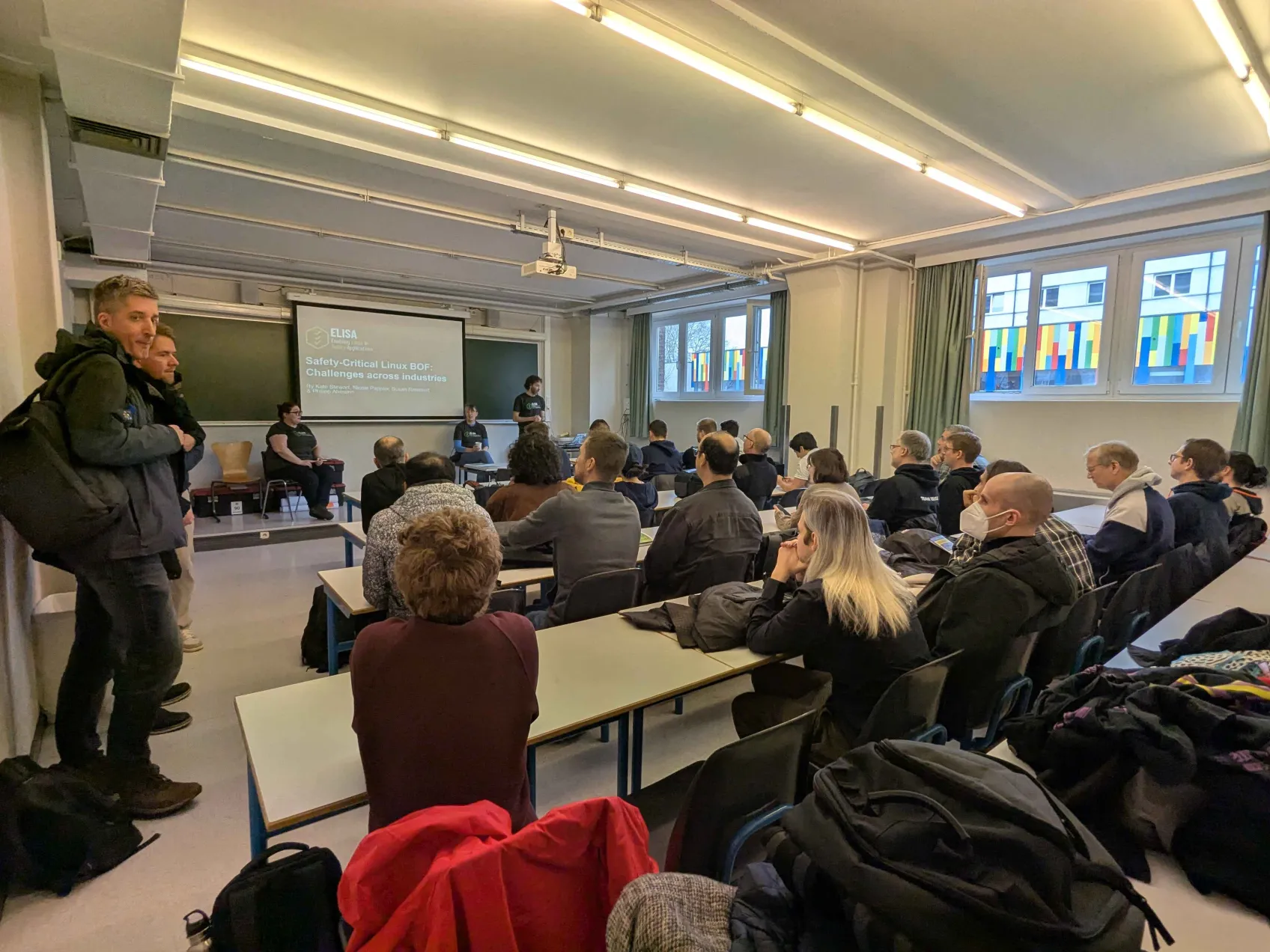
FOSDEM 2026 provided an important opportunity to bring practical discussions about open source in safety-critical systems to the broader developer community. Throughout the weekend in Brussels, ELISA Project Ambassadors and Technical Steering Committee members engaged with developers, safety engineers, and industry stakeholders to share progress, discuss certification challenges, and explore collaboration across automotive, aerospace, rail, industrial automation, and medical domains.
-
If you were unable to attend or would like to revisit the session the recording of Code, Compliance, and Confusion: Open Source in Safety-Critical Products is now available. Check here >>.
-
While the Birds of a Feather sessions were not recorded, presentation slides are available for Linux & Open Source Software for Safety Applications in Railways and Safety-Critical Linux: Challenges Across Industries.
-
-
These discussions covered certification pathways, governance and compliance challenges, documentation and tooling needs, system architecture considerations, and opportunities for cross-industry collaboration. Thank you to everyone who joined the conversations at FOSDEM 2026 and continues to support the advancement of Linux in safety-critical systems.
-
Margo
- Get started with Margo Preview Release 1 (PR1)! This technical preview enables the industrial edge ecosystem to work hands-on with the Margo specification for interoperable application lifecycle management.
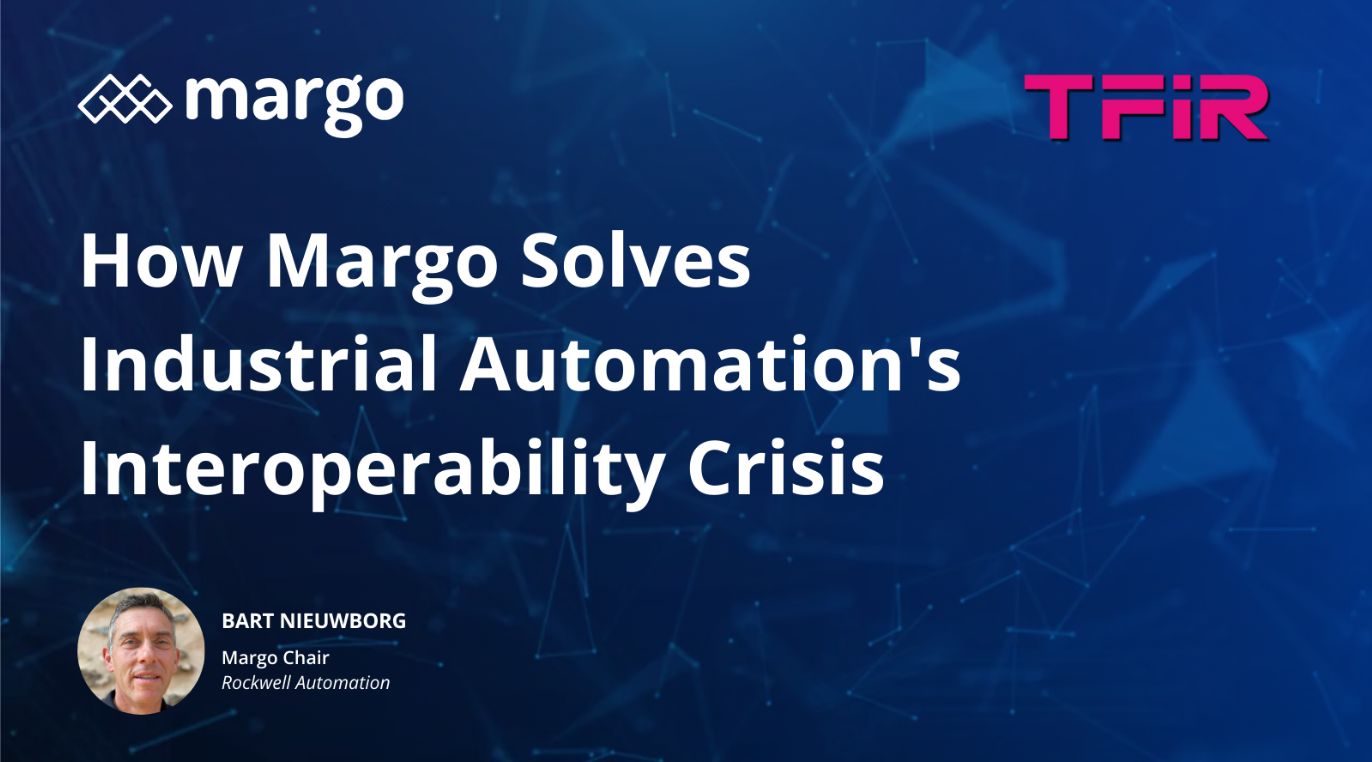
- New Interview: Margo Chair Bart Nieuwborg chatted with Swapnil from TFiR and shared how Project Margo is addressing this with an open source approach to interoperability at the edge. Preview Release 1 introduces an early spec and a hands on sandbox so teams can see it work, test it, and give feedback. Watch the full episode >>
OpenSSF
-
At FOSDEM 2026, the CRA in Practice DevRoom showcased how developers, maintainers, foundations, and manufacturers are translating CRA requirements into real workflows using open collaboration, tooling, and community-driven processes.
-
From SBOMs and VEX to stewardship models and risk-based compliance, this blog captures the key lessons and takeaways.
-
Read the full recap and explore what CRA readiness looks like in practice.
-
-
The Global Cyber Policy Working Group at the OpenSSF brings together maintainers, foundations, vendors, and policy experts from around the world to examine how global legislation, standards, and frameworks impact open source in practice, including the EU Cyber Resilience Act (CRA).
-
This is where the community comes together to discuss the intersection of cybersecurity and international regulation, engage directly with regulators and standards bodies, and coordinate on policy related standards, tooling, and processes that make compliance achievable for open source projects and their users.
-
If you care about how global cyber policy impacts open source and want to help shape what comes next, join the Global Cyber Policy Working Group!
-
-
Learn more >> | Contribute through Github >> | Join Slack >> | View upcoming meetings >> | Subscribe >>
PowSyBl
-
Registration is now open for LF Energy Summit Europe, taking place 15-16 September in Berlin. The PowSyBl project expects to present several talks and demos at the event. Register today >>
PyTorch
-
Join us for PyTorch Conference Europe 2026 | April 7–8 in Paris, France.
-2.png?width=1200&height=630&name=Social%20Snackable%20(1)-2.png)
-
PyTorchCon EU is a two-day event hosted by PyTorch Foundation that features technical talks, hands-on workshops, and sessions spanning infrastructure, training, inference, agent-based applications, responsible AI, security, and privacy. Registration and sponsorship opportunities are available.
-
RISE
-
RISE is deep in preparation for the events season, focusing strongly on two major RISC-V events in Q2 - RISC-V Days at Computex in Taipei, and RISC-V Summit Europe in Bologna. We will be speaking and sponsoring at both events, so please stop in and have a discussion.
-
We also have two very active ongoing RFPs:
- Along with several internal efforts, all in the service of fortifying the RISC-V software ecosystem. We hope you and your company will consider joining us to make RISC-V even more of a competitive platform as it emerges as a commercially successful, openly developed hardware architecture.
Servo
-
As usual we continue with our monthly releases, the last one adding multi-window support. You can read all the details about them in our blog >>
-
Apart from that a few new projects are starting to use Servo underneath, you can find them here >>. The new web browser using web technologies to build the UI is worth highlighting.
-
Last, Servo had 2 talks at FOSDEM: “The Servo project and its impact on the web platform ecosystem” by Manuel Rego and “Implementing Streams Spec in Servo web engine” by Taym Haddadi. Videos are already available if you want to watch them!
Zephyr Project
-
FOSDEM 2026 and EU Open Source Week were a great chance for the Zephyr community to connect in Brussels from January 26 to February 1. It was a busy and exciting week filled with technical discussions, meetups, and conversations about the future of open source.
-
At FOSDEM (January 31–February 1), the Zephyr Project shared a stand with the Dronecode Foundation. We showcased live demos, products running Zephyr, and spoke with developers, maintainers, and community members about embedded systems, security best practices, and the Cyber Resilience Act (CRA).
-
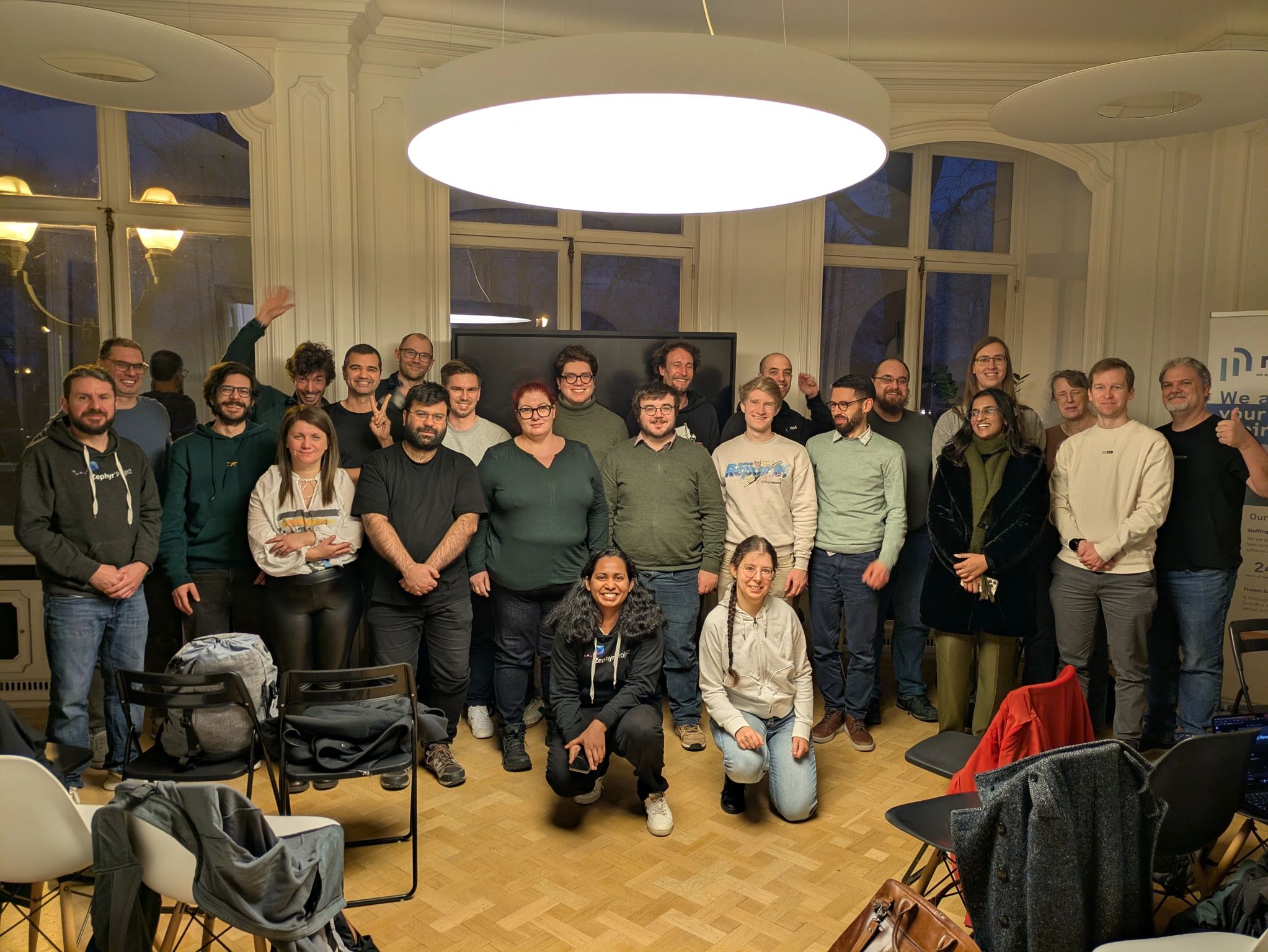
Before FOSDEM, the Zephyr meetup on January 30 brought the community together for focused technical discussions and networking. Read the meetup recap blog here >>
-
The Zephyr RTOS Community BoF on January 31 also created space for open conversation about the project roadmap, real-world product feedback, and the future direction of Zephyr as it approaches its 10-year milestone.
-
The talk “SBOMs for Embedded Firmware: The Zephyr RTOS Case Study” explored how Zephyr integrates SPDX-based SBOM generation into its build system to better support security and regulatory needs. You can watch the session recording here.
-
Thank you to everyone who joined us during EU Open Source Week. We look forward to continuing the conversations and collaboration throughout the year.
- Meet the Zephyr Project community at these events:
- Embedded World Exhibition & Conference: Nuremberg, Germany - March 10 - March 12, 2026
- IoT Stars at Embedded World - March 10, 2026
- Zephyr Project meetup (March 16, 2026): Copenhagen, Denmark
- Zephyr Project Meetup (March 18, 2026) – Jena, Germany
- Zephyr Project meetup (March 26, 2026): Rennes, France
LF Education highlights
-1.png?width=1600&height=900&name=Presentation%20-%20TT%20(1)-1.png)
One more day to take the Tech Talent survey! Help shape the future of tech talent. If you are responsible for hiring or training technical talent for your team or organization, your input is needed!
 Bonus: Complete the survey and receive a 35% discount on Linux Foundation e-Learning courses or certification exams.
LF Research: Two new reports on AI’s impacts around the world!
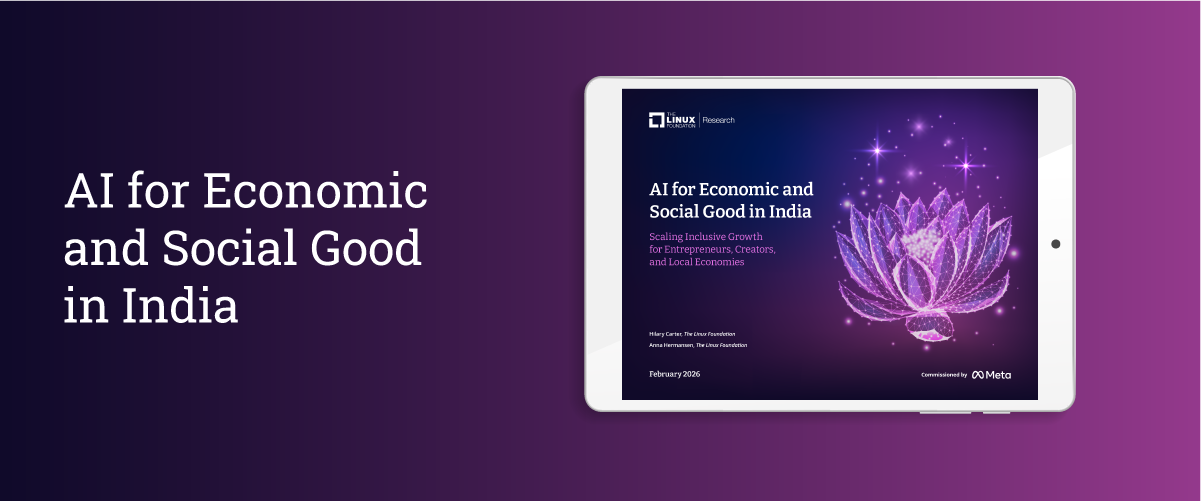
In advance of the India AI Impact Summit, we examined the unique characteristics of the Indian AI market and how the country is primed to address societal challenges and inequity through accessible AI adoption. Through a literature review and a dozen interviews, the report shows that India’s $200-billion-plus global IT services industry, its large and digitally native population, and its history of national digital public infrastructure make it a key environment for AI to scale rapidly and broadly. Download the report to read the complete findings and recommendations!
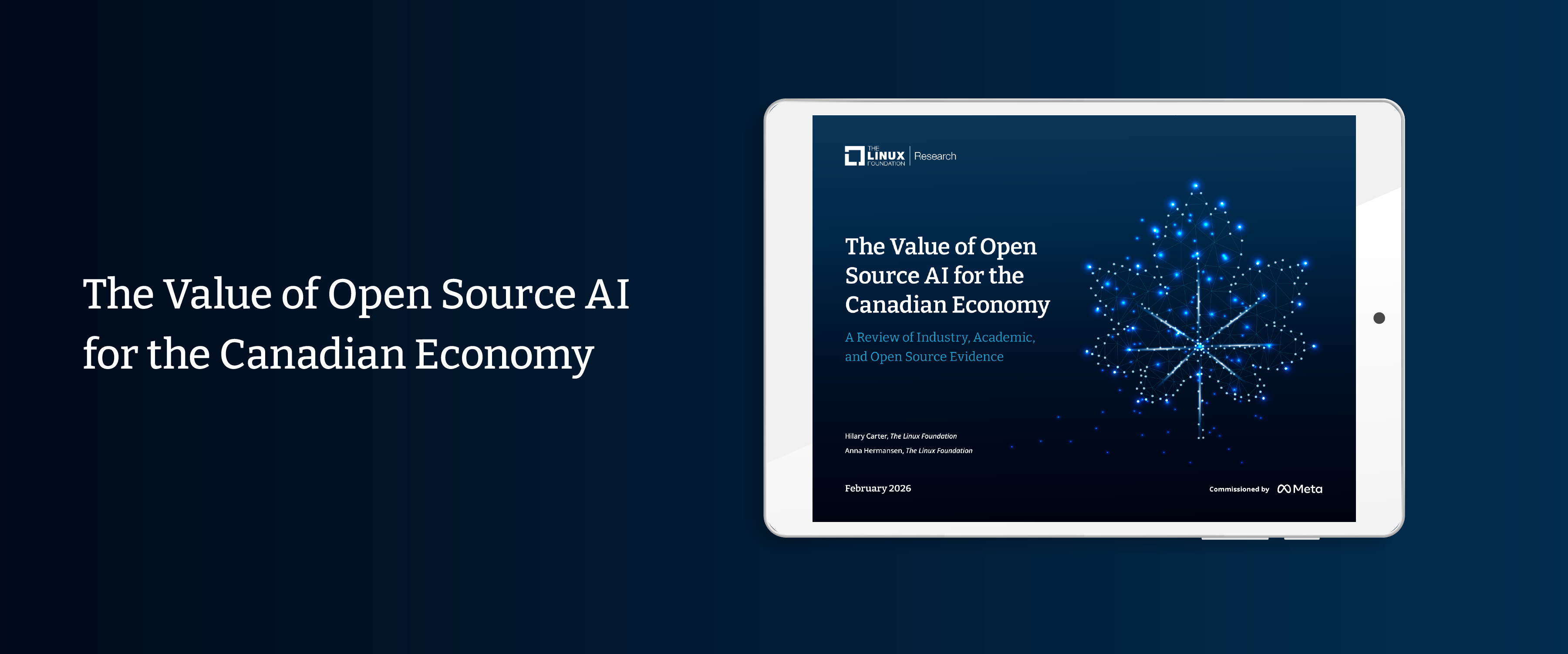
The Canadian installation of our Meta-sponsored series on open source AI shows that despite Canada’s early momentum in policy development, funding, and academic excellence, it faces challenges in the commercialization of AI. To address this gap, open source AI provides an opportunity to kick-start innovation and adoption by lowering barriers to access and market entry and enabling sovereign development by providing greater security, transparency, and customization. The reports conclude with a handful of recommendations.
LF Europe Events: Mark your calendar!
Upcoming events:
- AGL at embedded world
Mar 10–12, 2026 / Nuremberg, Germany - RISC-V at embedded world
Mar 10–12, 2026 / Nuremberg, Germany - Zephyr at embedded world
Mar 10–12, 2026 Nuremberg, Germany - Agentics Day: MCP + Agents Europe
Mar 23, 2026 / Amsterdam, Netherlands - ArgoCon Europe
Mar 23, 2026 / Amsterdam, Netherlands - BackstageCon Europe
Mar 23, 2026 / Amsterdam, Netherlands - CiliumCon Europe
Mar 23, 2026 / Amsterdam, Netherlands - Cloud Native AI + Kubeflow Day Europe
Mar 23, 2026 / Amsterdam, Netherlands - Cloud Native Telco Day Europe
Mar 23, 2026 / Amsterdam, Netherlands - FluxCon Europe
Mar 23, 2026 / Amsterdam, Netherlands - KeycloakCon Europe
Mar 23, 2026 / Amsterdam, Netherlands - KubeCon + CloudNativeCon Europe
Mar 23–26, 2026 / Amsterdam, Netherlands - Kubernetes on Edge Day Europe
Mar 23, 2026 / Amsterdam, Netherlands - KyvernoCon Europe
Mar 23, 2026 / Amsterdam, Netherlands - Observability Day Europe
Mar 23, 2026 / Amsterdam, Netherlands - Open Source SecurityCon Europe
Mar 23, 2026 / Amsterdam, Netherlands - OpenTofu Day Europe
Mar 23, 2026 / Amsterdam, Netherlands - Platform Engineering Day Europe
Mar 23, 2026 / Amsterdam, Netherlands - WasmCon Europe
Mar 23, 2026 / Amsterdam, Netherlands
To register for in-person attendance or virtual LF Europe events, please view our full calendar of events here, and be sure to subscribe to our events newsletter. Check out our Flickr stream for photos of past events!
Follow us!
Follow the Linux Foundation Europe on social media to get all the latest info, updates on upcoming events, and breaking news and announcements from the global open source ecosystem. Follow us here: Mastodon, Bluesky, Facebook, LinkedIn, X.